
A restaurant opening its doors, a freelancer getting started, a small shop launching… Does every new business need a website from day one? The answer depends largely on what your customers need to know before choosing you.
When you start a business, the expenses soon add up. Equipment, premises, paperwork, marketing… And somewhere along the way, another question comes up: “Do I need a website too?”
Sometimes, yes. Sometimes, it makes more sense to start small.
A website can become a valuable tool for your business. But before investing, you should be able to answer one practical question: what should it help your customers do?
Explore your work? Understand your services? Plan a visit? Make a booking? Request a quote?
That need should guide your decision.
When a website can really help
Your customers need reassurance before getting in touch
Some decisions take more than an attractive photo or a few lines in a social media bio.
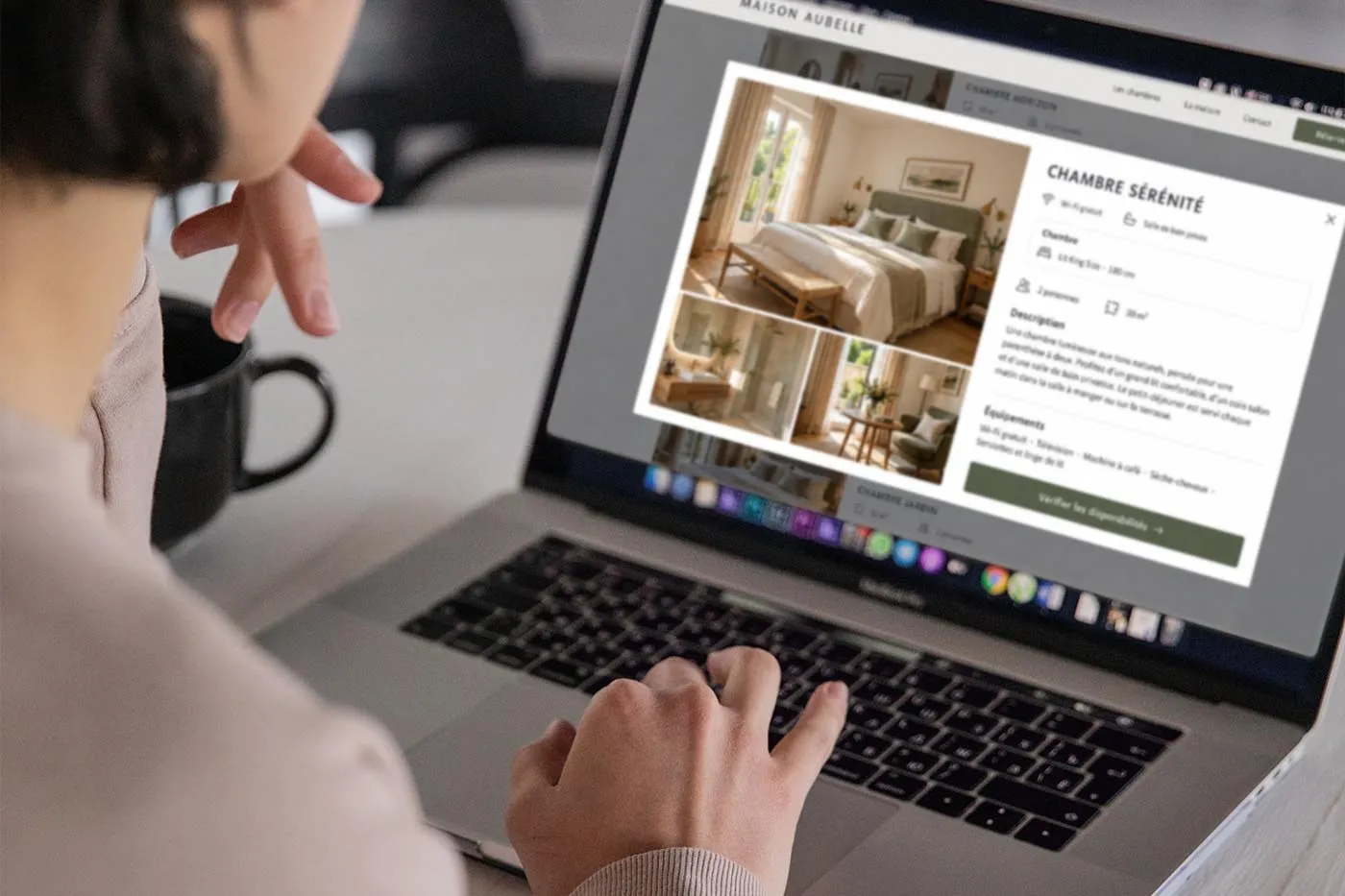
Before hiring a tradesperson, people want to see previous work, understand their expertise and check which areas they cover. Before booking a stay, they want to explore the rooms, facilities and practical details.
A website brings this information together in a clear, easy-to-follow way. It helps people picture the experience and gives them concrete reasons to get in touch.
Your services need a little explanation
Do you offer several services? Is your work bespoke? Do customers regularly ask how the process works?
A website can explain your approach, clarify what is included and answer those initial questions.
For a photographer, that might mean explaining what happens during a session. For a consultant, it could be outlining the different ways to work together. For a wellbeing practitioner, it might be presenting treatments and what each involves.
The purpose is simple: help potential customers understand what you do before the first conversation.
You need one place where people can find everything
On social media, information quickly gets scattered across posts, stories, profile descriptions and messages.
A website gives you one address to share, bringing together the essentials: your services, your work, your contact details and the next step.
It can also direct people to a tool you already use. A salon can link to its appointment platform. A guesthouse can link to its booking system. You do not always need to build something new.
When a website can wait
You are still shaping your business
Your offer changes every week. You are trying out different services. You are not yet sure exactly who you want to work with.
At this stage, a simple introduction that is easy to update may be more suitable. Your first customer conversations will help you understand which questions come up repeatedly and what information really matters.
You will then have a stronger foundation for building a useful website.
Your budget needs to get the business off the ground first
If paying for a website means delaying an essential purchase or putting pressure on your launch budget, it is reasonable to prioritise other things.
You can build things up gradually: clarify your offer, prepare a few good images, put your key information online and make it easy to get in touch.
A website can become part of that presence once its purpose is clearer and the budget is available.
Your current online presence already meets your immediate needs
Can customers easily find your information, understand what you offer and see how to book or contact you?
You may already have a sufficient foundation for your current stage of development.
That does not mean a website would add nothing. It simply means identifying what it would improve before making it a priority.

No website yet? Stay easy to find and contact
Putting off a website does not mean leaving your online presence to chance.
Someone who hears about you should be able to check that your business exists, understand what you do and find a way to reach you.
Depending on your business, that initial presence could include:
- A Google Business Profile, if your business is eligible, with up-to-date practical information.
- A suitable social media profile, where your services and contact details are easy to find.
- A booking platform or specialist directory, if your customers already use those services.
- A straightforward way to get in touch, by phone, email or a messaging channel you check regularly.
You do not need to be everywhere. Choose the channels you can realistically keep up to date.
For a restaurant, that might start with an address, reliable opening hours, an accessible menu and clear booking instructions. For a maker, it might mean a few well-presented examples of their work and a simple way to place an order.
Customers should not have to play detective to find basic information.
The same type of business, different needs
Two restaurants can have very different priorities.
The first opens with a small menu, a local customer base and bookings taken by phone. Accurate local listings can provide a starting point.
The second welcomes groups, hosts events and offers several menus. A website becomes more useful for explaining these options and making enquiries easier.
The same applies to a tradesperson: someone starting out with a few jobs through recommendations may have different needs from someone who wants to showcase a full portfolio and develop a new specialism.
Your sector matters. But your circumstances, goals and customers’ expectations matter just as much.
What if one page were enough?
Having a website does not necessarily mean creating ten pages, a blog and a bespoke booking system.
For some small businesses, one carefully planned page can already present:
- What you offer and who it is for.
- A few photos or examples of your work.
- Your approach and practical information.
- An obvious way to contact you or make a booking.
The right format depends on how much information your customer needs to take the next step. A simple offer may call for a simple website. A more complex business will need more structure.
Before deciding, ask yourself these five questions
- When someone hears about my business, what do they find when they look me up?
- Can they quickly understand what I offer and how to contact me?
- What do I find myself explaining to every new customer?
- What would a website make easier, both for my customers and for me?
- Is my offer clear enough, and do I have a suitable budget to build a website now?
If you can identify a specific gap, you already have a useful starting point for defining your project.
If you struggle to explain what the website would do, take some time to clarify that need first.
An online presence that fits your business today
A website is neither a compulsory step when launching a business nor a guarantee of enquiries. It should have a clear purpose and fit the way customers discover what you do.
For some businesses, it will be useful from the day they open. For others, a simpler online presence will provide room to get started, learn and prepare for what comes next.
The question is not just “Do I need a website?” but “What do my customers need in order to choose me?”
At BeFound Studio, I help small businesses present what they do clearly and build an online presence that fits their activity, priorities and budget.
Not sure where to start?